
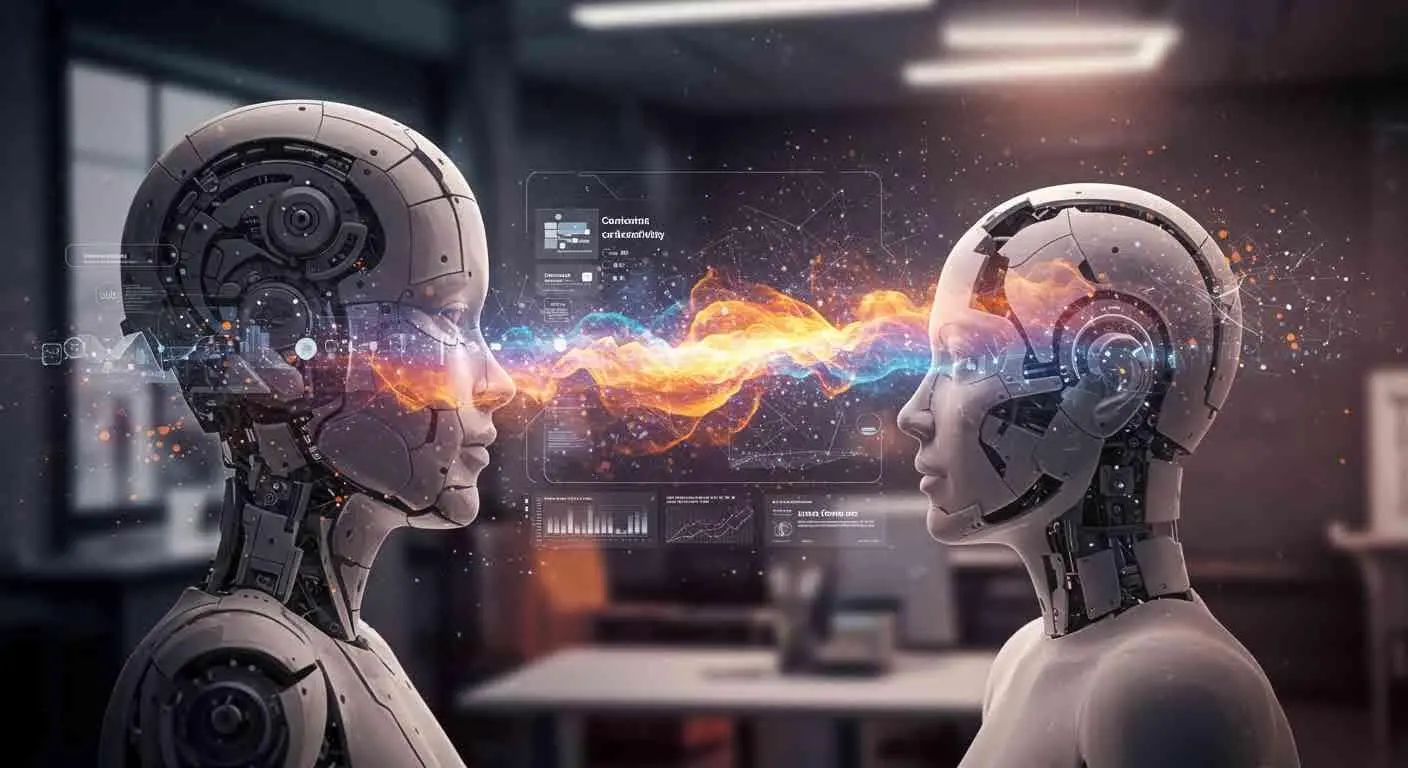
AI Technology as a Creative Infrastructure
In content-driven environments, AI technology functions less as a replacement and more as an underlying infrastructure. Algorithms assist with idea generation, language refinement, image composition, and content variation at scale.
By analyzing patterns from massive datasets, AI technology helps identify stylistic preferences, audience responses, and optimal formats. This capability explains why intelligent systems are increasingly referenced in discussions about modern content ecosystems.
Content Production Enhanced by AI Technology
AI technology is widely used to support repetitive or time-intensive creative tasks. This allows human creators to focus on strategy, narrative coherence, and originality.
| Creative Task | Role of AI Technology | Resulting Benefit |
|---|---|---|
| Text drafting | Language modeling | Faster content turnaround |
| Image creation | Visual pattern synthesis | Style consistency |
| Video editing | Scene detection | Reduced manual editing |
| Content localization | Semantic adaptation | Improved regional relevance |
These applications demonstrate how AI technology reshapes creative efficiency without eliminating human input.
Data-Driven Feedback Loops in Creative Work
One of the most significant contributions of AI technology is its ability to evaluate content performance. Intelligent systems analyze engagement metrics, readability, and semantic clarity to provide actionable feedback.
This data-driven approach allows creators to refine content based on observed behavior rather than intuition alone. As a result, AI technology becomes part of an iterative creative loop rather than a one-time production tool.
Constraints Shaping the Use of AI Technology in Creativity
Despite its advantages, AI technology in creative fields faces constraints. Issues such as originality, attribution, and data bias influence adoption decisions. Over-reliance on automated systems may also lead to stylistic homogenization.
Recognizing these limitations helps readers assess AI-generated content more critically and understand why human oversight remains essential.
Evolving Expectations for AI Technology in Creative Industries
Future developments in AI technology are expected to emphasize controllability, transparency, and ethical data use. As regulatory frameworks mature, creative applications of AI are likely to become more structured and standardized.
These trends suggest that AI technology will continue to support creativity, while human judgment defines direction and meaning.
Conclusion
AI technology is redefining how digital content is created, refined, and evaluated. Rather than replacing creativity, intelligent systems are altering its underlying processes. Staying informed about how AI technology operates within creative domains enables readers to better understand the evolving relationship between data, automation, and human expression.